
Ransomware Attacks in Manufacturing Doubled From 2019
From 2019 to 2021, ransomware attacks in manufacturing doubled, making it the most commonly targeted industry in 2020 and 2021, according to Advisen loss data. Advisen’s loss database contains 3,415 ransomware attacks and 189 ransomware attacks in manufacturing.
The manufacturing industry is a high-value target for ransomware attacks. Most manufacturers have embraced automation and digitization, but many only store files locally, leaving them vulnerable to attack.
Manufacturing companies also store high-value data, such as intellectual property and trade secrets, which makes manufacturers more likely to pay if their information is stolen or hackers threaten to publish it online. In some cases, hackers will steal data involving third parties as well, such as clients, suppliers and partners. This gives them even more leverage to extort money in a ransomware attack.
In addition to ransom payments, ransomware attacks on manufacturing can also be extremely costly in terms of response and business interruption costs. For example, the ransomware attack on meat supplier JBS Foods on May 31, 2021, resulted in a total shutdown of operations and an $11 million ransom, according to Advisen loss data.
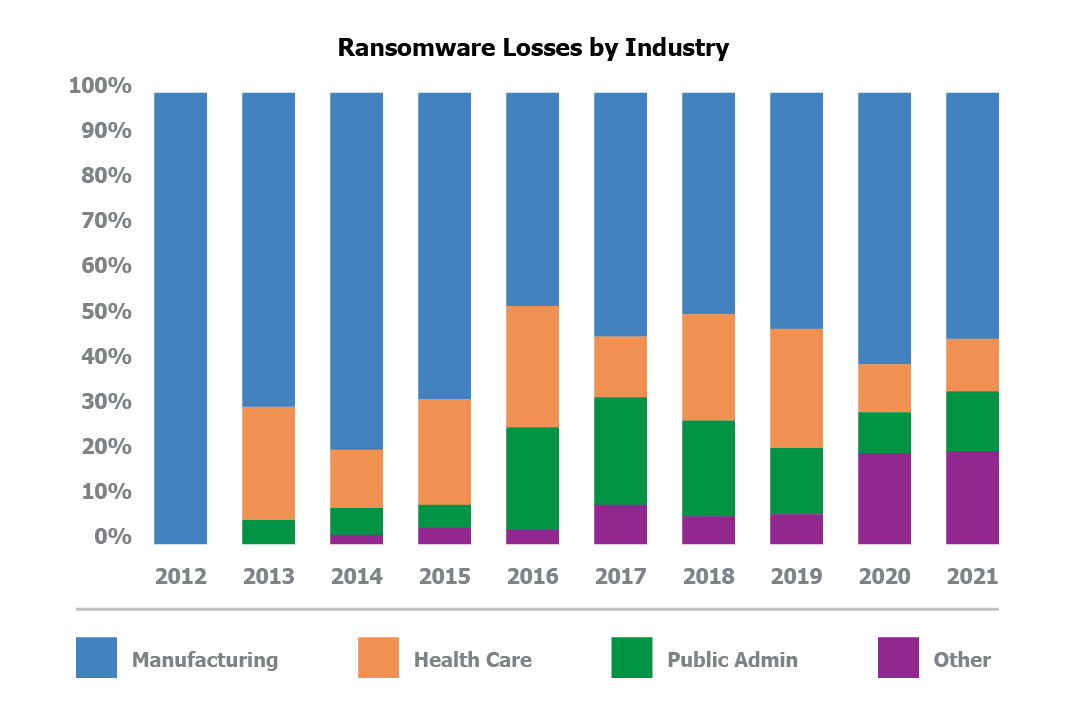
Looking at ransomware losses by industry over time, public administration and health care were some of the most frequently targeted industries from 2013 to 2019; manufacturing accounted for a relatively small percentage of total ransomware attacks. However, by 2020, manufacturing became the most commonly targeted industry.
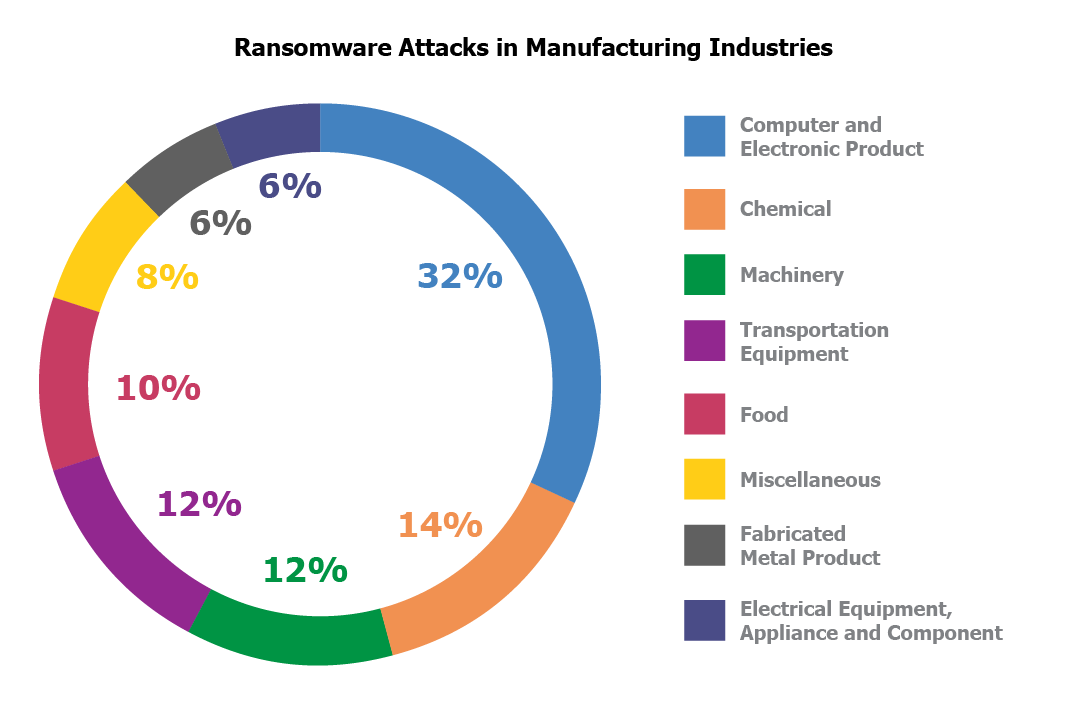
Within the manufacturing industry, computer and electronic product manufacturing saw nearly double the number of ransomware attacks than any other category at 32%. These attacks include ransomware attacks on an Apple supplier, Samsung Electronics and Bose Corporation, according to Advisen loss data.
Chemical manufacturing accounted for 14% of the remaining losses, while machinery manufacturing and transportation equipment manufacturing each accounted for 12%, according to Advisen loss data.
Contact INSURICA today to learn more about our manufacturing industry services and capabilities.
© 2022 Zywave, Inc. All rights reserved.
About the Author

Share This Story



Related Blogs
OSHA’s Safe and Sound Week Scheduled for Aug. 12-18
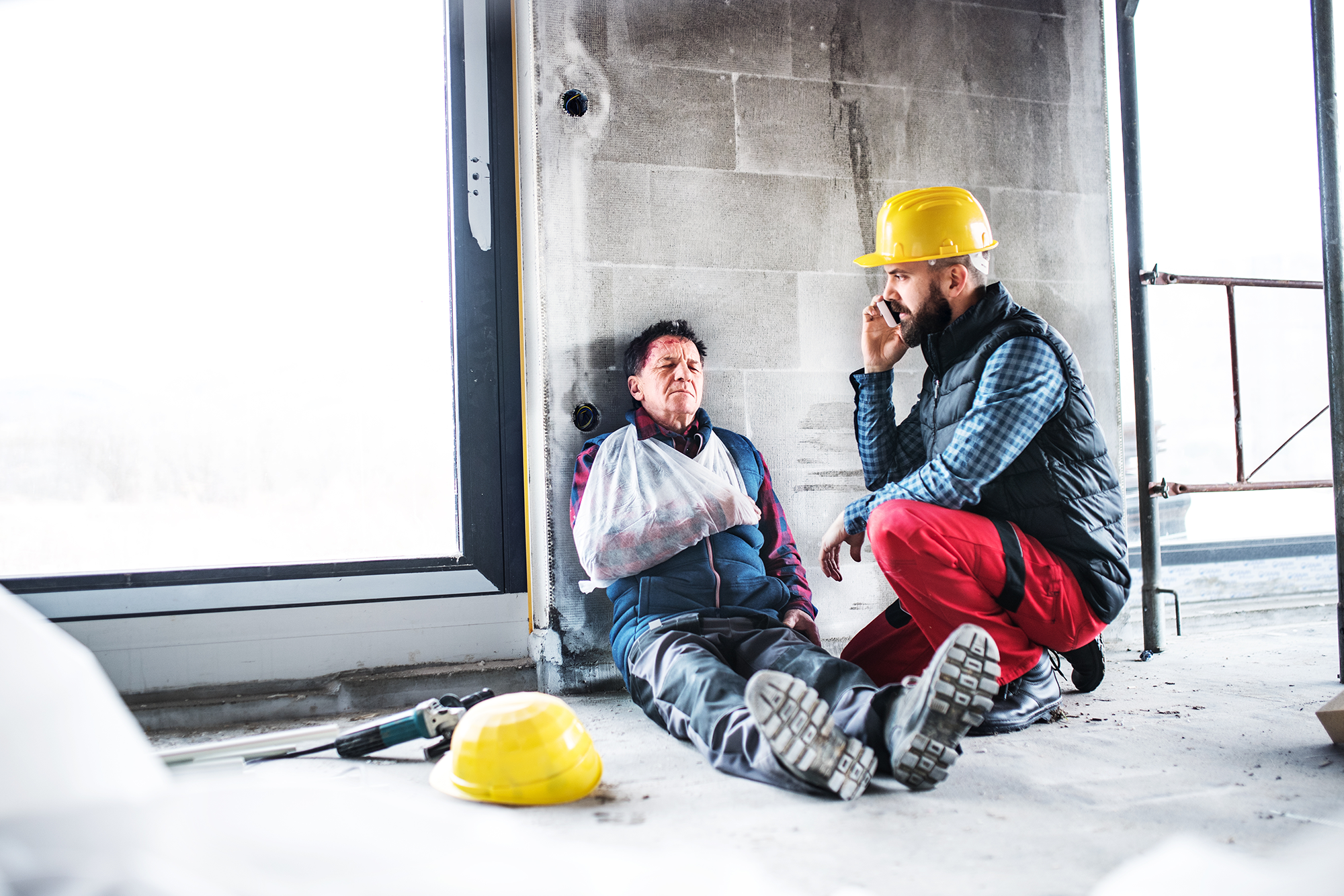
Each year, more than 5,000 workers are killed on the job. Additionally, more than 3.6 million employees are seriously injured each year while at work. Because of this, the Occupational Safety and Health Administration (OSHA) holds a nationwide event each August called Safe and Sound Week, which promotes the importance of companies incorporating safety and health programs into their workplace. This year, the event runs Aug. 12-18, 2024.

2024 Midyear Market Outlook: Workers’ Compensation
Profitable underwriting results have generated favorable conditions across the workers’ compensation insurance market for nearly a decade. According to the National Council on Compensation Insurance (NCCI), the segment produced combined ratios of 84.5 and 84.9 in 2022 and 2023, respectively, demonstrating continued profitability.

CrowdStrike, the Most Important Cyber Accumulation Loss Event Since NotPetya, Highlights Single Points of Failure
In what is being called “the most important cyber accumulation loss event since NotPetya,” the July 19, 2024, global technology outage (CrowdStrike) will produce scores of insurance claims across a range of policies, test cyber policy wordings,and sharpen the industry’s focus on single points of failure.