
Forklifts play an important role in moving materials safely and efficiently in many workplaces. However, even a simple task like getting on or off a forklift can lead to serious injuries if not done correctly.
Common hazards associated with mounting and dismounting a forklift include:
- Slip, trips and falls
- Strains and sprains
- Head injuries from hitting head on the overhead cage
- Injuries from the forklift moving due to contact with controls
The following behaviors and workplace conditions are factors that lead to injuries when mounting or dismounting a forklift:
- Improper technique/not maintaining three points of contact
- Fatigue and worker complacency toward safety
- Workers jumping from the forklift
- Workers rushing or not paying attention
- Inappropriate footwear
- Workers carrying items in their hands while mounting and dismounting
- Damaged grab handles and steps
- Uneven, cluttered or unsafe surfaces
Safe Work Procedures
The following procedures can help workers prevent injuries when mounting and dismounting forklifts:
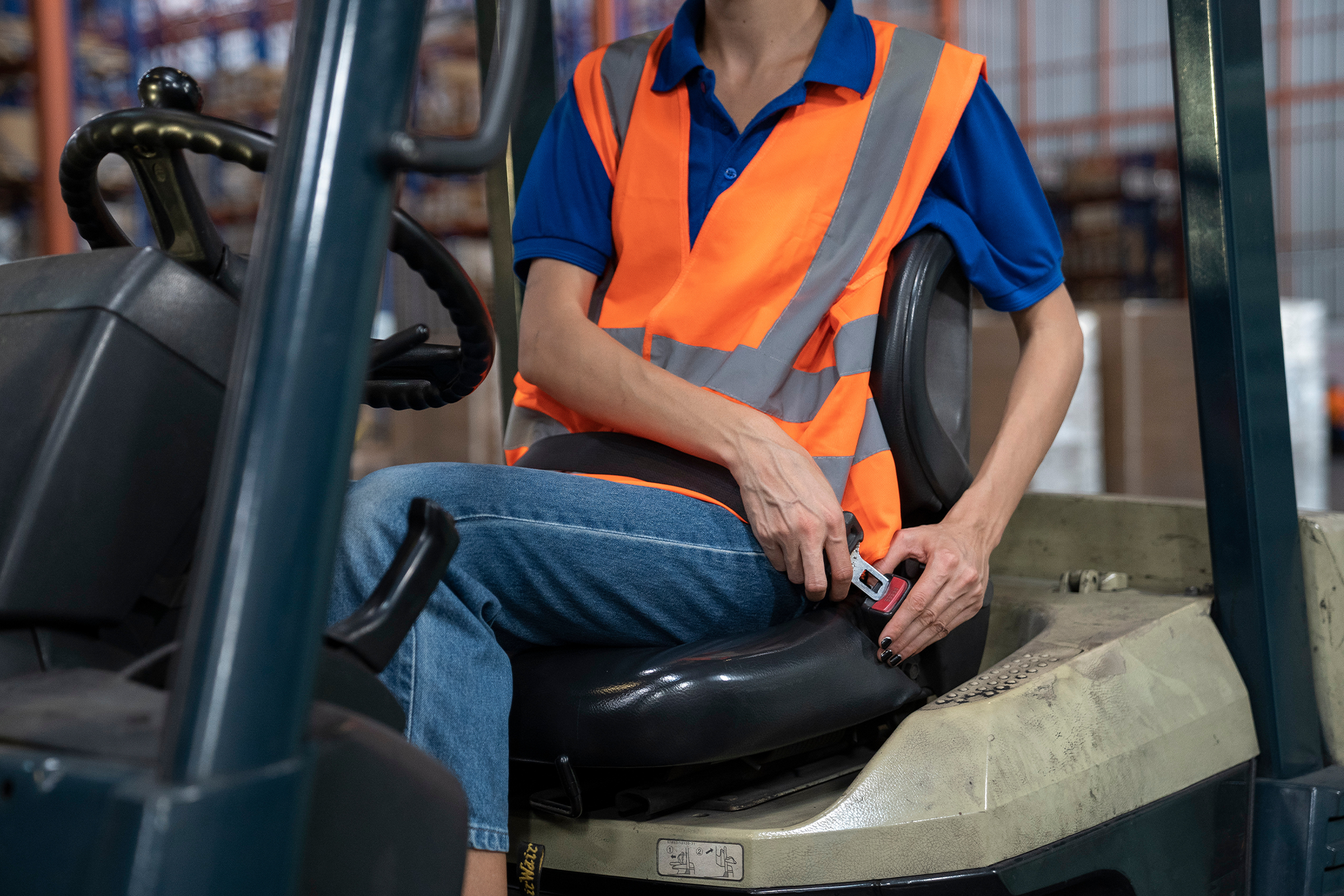
- Face the forklift when entering or exiting and move slowly and carefully. Turning away or rushing can cause slips or falls, especially if your footing is unstable or the surface is slick. Make sure to pull or lower your body carefully into or out of the cab.
- Maintain three points of contact until you are fully seated or completely on the ground. This means keeping a secure grip and footing throughout the entire process to prevent sudden slips.
- Use the manufacturer’s handholds and steps for support instead of the steering wheel or controls. These components can move unexpectedly and cause you to lose balance, which increases the risk of injury.
- Wear appropriate footwear to prevent skids and slips. Shoes with good traction help reduce the risk of losing your footing on steps.
- Check that your hands and feet are clean and dry before climbing on or off the forklift. Grease, oil or moisture can make surfaces slippery and increase the chance of a fall.
- Be aware of your surroundings before and during mounting or dismounting. Watch for other equipment, pedestrians and obstacles that could create hazards while you enter or exit the forklift.
What Not to Do
Forklift operators must not do the following:
- Do not jump from the forklift even if you are in a hurry. Jumping can lead to injuries in the ankle, knee, back or other areas. It also increases the risk of slipping on uneven or wet surfaces.
- Do not use the steering wheel or hydraulic controls as a handhold. These parts are not designed for support and can move suddenly, causing you to lose balance and fall.
- Do not rush or skip steps when getting on or off the forklift. Taking shortcuts often leads to slips, trips and musculoskeletal injuries that could have been avoided.
- Do not carry tools, boxes or other items in your hands while mounting or dismounting. Keeping your hands free ensures you can maintain a firm grip on the handholds and stay stable.
- Do not ignore damaged steps or other components of the forklift. Report worn or unsafe components of forklifts immediately to prevent accidents for yourself and others in the workplace.
Take Action
Complete one or more of the following activities with workers to reinforce the safety messaging. The following activities are sample activities that can be performed.
- Demonstrate the three-points-of-contact rule (correct technique): Demonstrate the proper technique for mounting and dismounting a forklift by facing the forklift and maintaining three points of contact.
- Question: What are some bad habits for mounting and dismounting forklifts, and why are they dangerous?
- Demonstrate where to grab and step: Using an actual forklift, point out where to grab and step. Show employees where the designated grab handles are on your forklifts.
- Question: Before dismounting a forklift, what are some things you should check?
Applicable Standards/Regulations/Policies
The following list provides notable applicable standards, regulations and guidance. Please note that additional federal and state rules may apply, as well as company safety policies.
- OSHA 29 CFR 1910.178 (Powered Industrial Trucks)
- ANSI/ITSDF B56.1 (Safety Standard for Low Lift and High Lift Trucks)
For more risk management resources, contact INSURICA today.
This is not intended to be exhaustive nor should any discussion or opinions be construed as legal advice. Readers should contact legal counsel or an insurance professional for appropriate advice. ©2026 Zywave, Inc. All rights reserved
About the Author

Share This Story




Related Blogs

Form 5500 Filing Season: What Employers Should Review Before July 31
As mid-year approaches, employers sponsoring benefit plans should begin preparing for upcoming Form 5500 filing obligations. For many calendar-year plans, Form 5500 filings are due by July 31, making June an ideal time to confirm whether filing requirements apply and ensure needed information is being gathered.

Pharmacy Costs Are Surging Again — What Employers Can Actually Do in 2026
Pharmacy spending is once again the fastest growing component of employer health plans. Specialty drugs now account for more than half of total pharmacy spend, and GLP 1 medications for diabetes and weight management are reshaping budgets. Employers are feeling the pressure: rising premiums, unpredictable claims, and employee expectations for access to high cost therapies.


Self Funding for Small and Mid Sized Employers: Why 2026 Is the Breakout Year
Self funding is no longer just for large employers. In 2026, small and mid sized businesses are embracing level funded and partially self funded plans at record rates. Rising premiums, greater access to stop loss coverage, and improved data analytics are making self funding a viable option for groups as small as 25–50 employees.